A group can keep Shabbat in an ordinary hotel, but almost everything has to be agreed before signing, and then written into the contract. Most trouble comes from the building: key cards, motion-sensor lights, hot water from a boiler, and a hall someone has already booked for Saturday. We ask every venue about these 10 things.
1. The kitchen: exclusive use, or a room for warming food
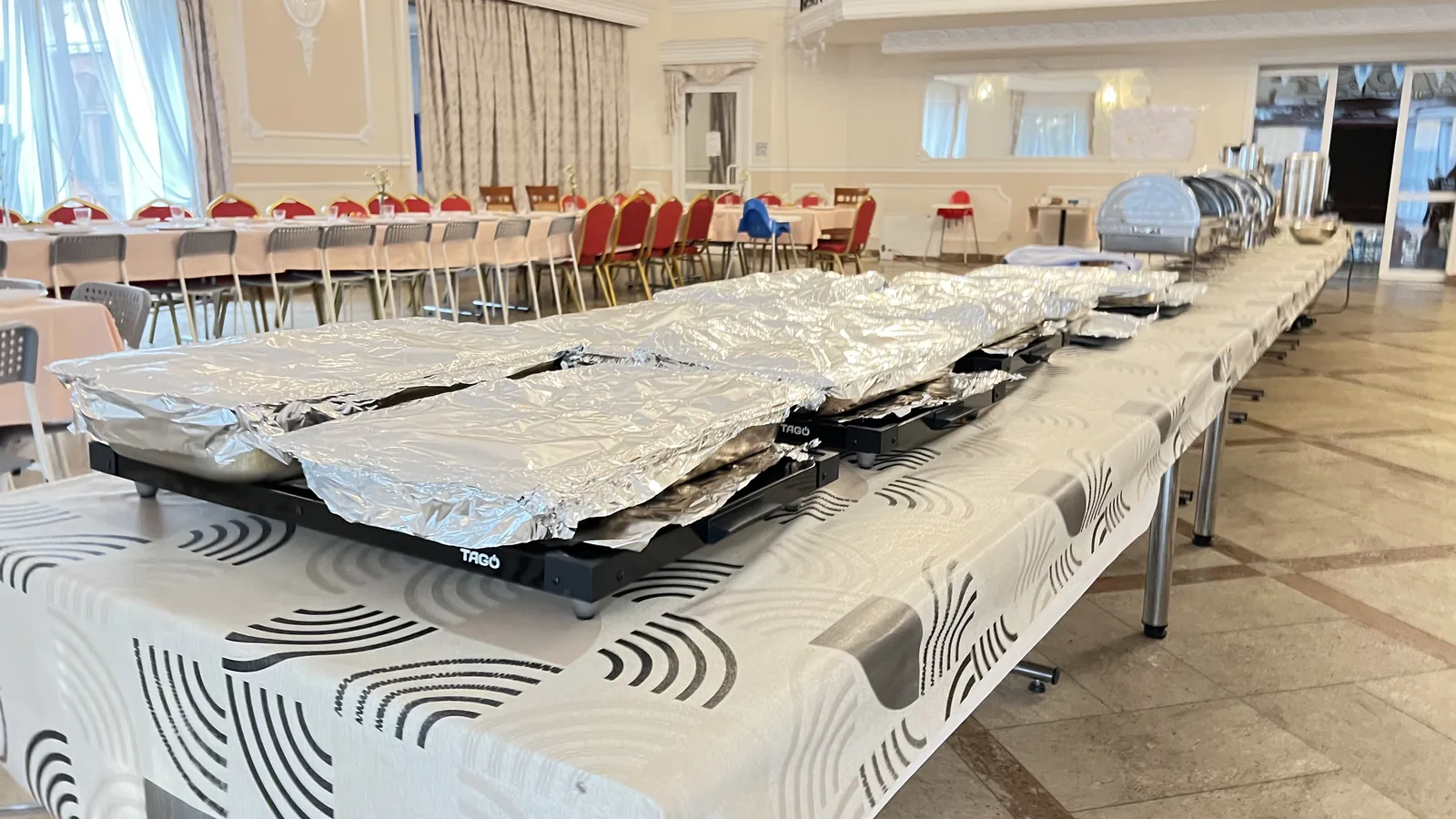
If we cook on site, we need the hotel kitchen (or part of it) for the whole stay, from two days before arrival - that time goes on koshering (we agree the exact timing with the group). The kitchen is locked whenever our team is not working. If the hotel says no, the alternative is catering from a kosher kitchen and a separate room for platas and urns. Also ask whether any kitchen surfaces must not be treated with boiling water or a blowtorch - better to know before you arrive.
2. Power for platas and urns for about 26 hours
Shabbat platas and urns run from Friday before candle lighting until Saturday night. They draw more power than everyday appliances, and on Shabbat nobody in the group will reset a breaker, so to be safe we connect them to a separate, tested circuit. We ask how many sockets there are in the kitchen and the hall, on how many separate circuits, and whether the equipment can stay on for the whole of Shabbat.
3. Hot water only from the urn
Hotels usually heat water in a boiler or an instant heater. Turning on the hot tap on Shabbat starts the heating, so religious groups use only cold tap water and hot water from the urn. The urn is filled and boiled before Shabbat, the dial taped over, with a "do not refill" sign next to it. The group's rabbi sets the details.
4. Motion-sensor lights
Corridors, stairs and toilets increasingly have lights on sensors. We ask whether they can be set to stay on, or stay off. If not, we put out lights that stay on all the time: plug-in night lights, or battery lights where corridors and stairs have no sockets. Ask about sockets too. Without light, older guests walk dark stairs at night.
5. Key cards and automatic doors
An electronic key card is a problem on Shabbat, and the better the hotel, the bigger the problem. The card system usually cannot be switched off without risk to the whole building, and reception or the technician often does not know how to change a single lock. What works in practice: many guests have their own methods and tell us what they need; doors are left slightly ajar; a metal key, or a staff member who opens the door. We also have our own covers that stop the latch from clicking shut, but only a limited number. The same goes for sensor-operated entrance doors and card gates. Settle it with reception before arrival, not on Friday evening.
6. The elevator
Ask whether the elevator has a Shabbat mode (it stops on every floor by itself). If not, ask for rooms on low floors for older guests and families with strollers.
7. A hall for meals and prayer for the whole of Shabbat
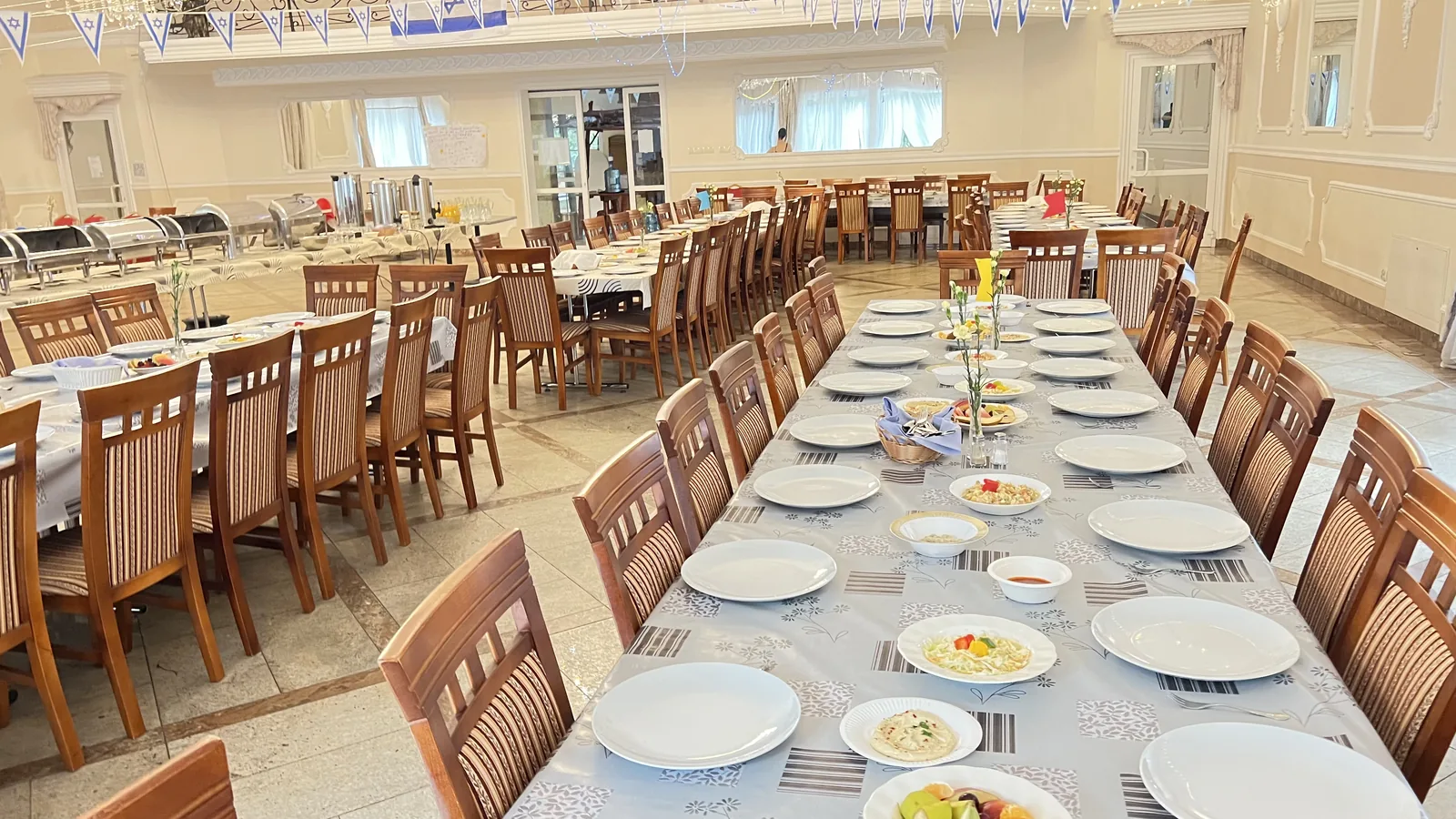
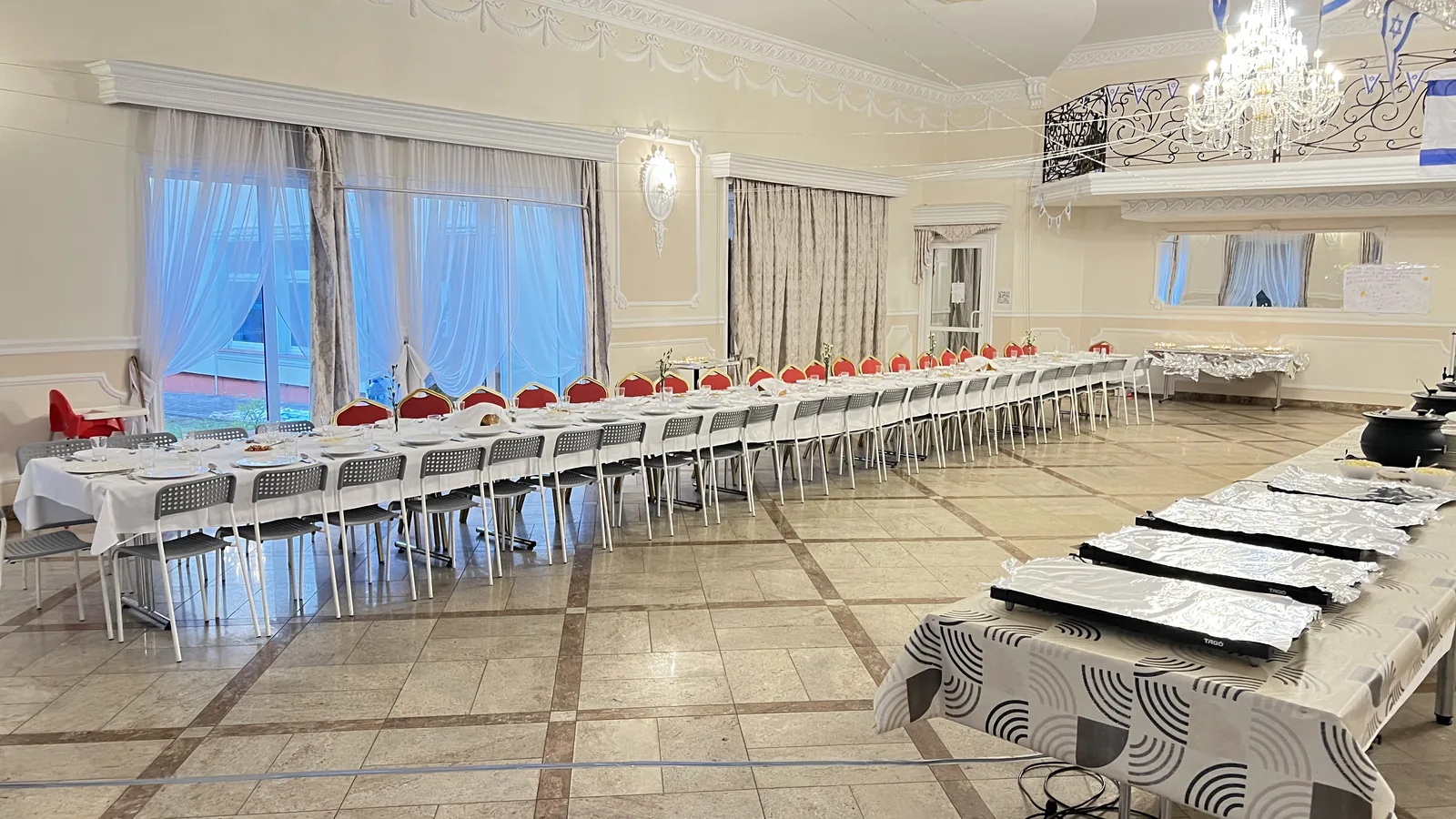
The group needs a hall from Friday afternoon to Saturday night: for meals, prayer and talks. In many hotels the hall is already rented on Saturday for a wedding or a conference - check this first. If there is no hall, a tent on the hotel grounds can work, lit from inside with lights switched on before Shabbat (heated in cool weather). We set the tables on Friday; if the group prays in the hotel, we also agree the place and layout for a minyan.
8. Candles and smoke detectors
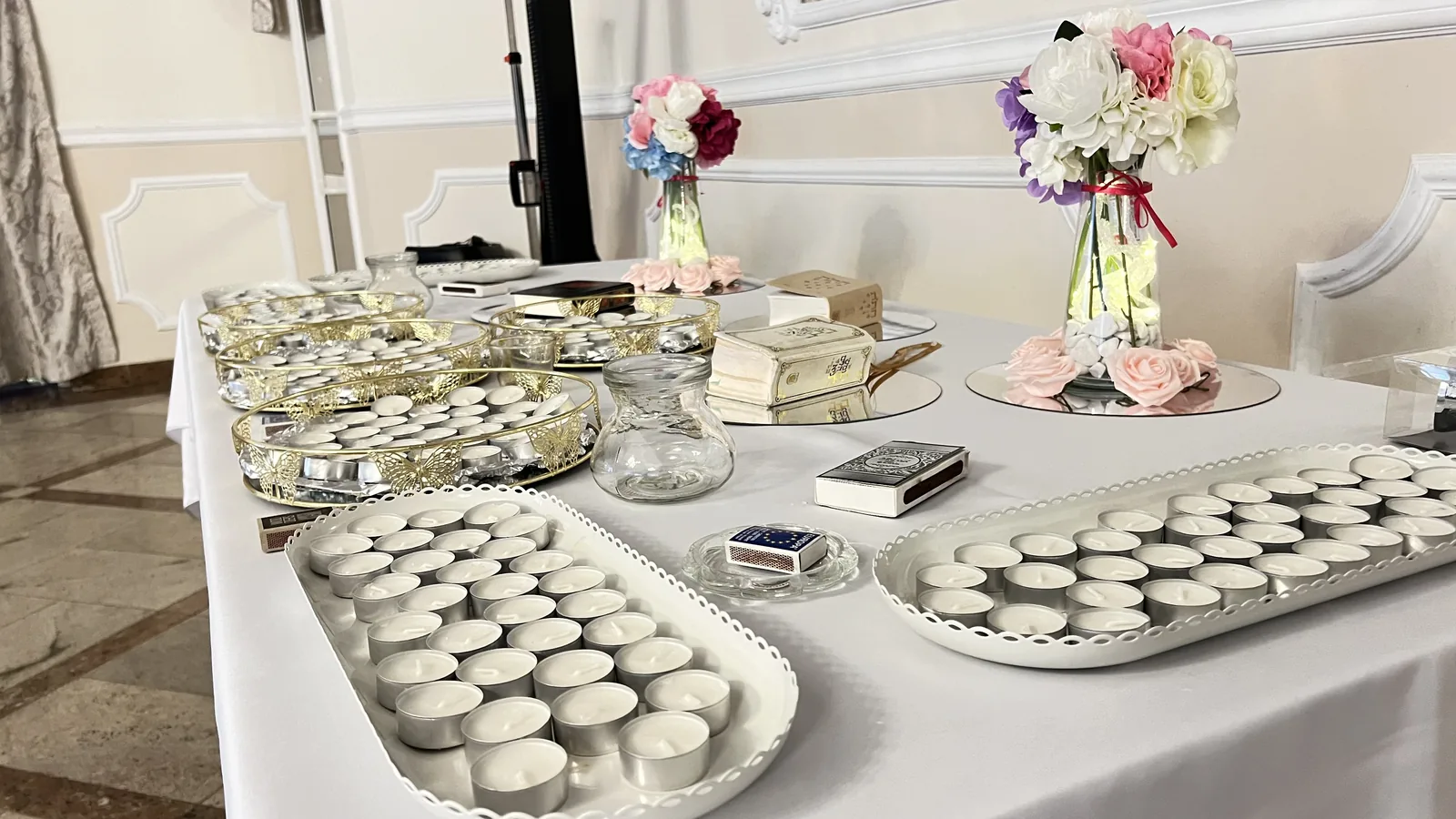
Candles are lit before sunset and are not put out on Shabbat. The hotel has to name a safe place (usually in the hall, supervised) and say whether there are smoke detectors nearby. Candle lighting times for Krakow are on our Shabbat for groups page.
9. Staff and breakdowns on Shabbat
Agree who from the hotel is on site on Saturday and can fix a problem (power, water, a lock), and write down the phone number. Ask whether room cleaning can pause on Shabbat. Heating and air conditioning in rooms and the hall are set before Shabbat.
10. Eruv
If the group needs to carry things outside the rooms (keys, strollers, medicine), the group's rabbi decides whether an eruv is needed. It is put up before Shabbat under rabbinic supervision - in the hotel or on the grounds, if the hotel agrees.
What else matters in practice
- Hot water and coffee from 6:30. Religious guests get up early to pray; the urn and something for coffee should be ready before breakfast, Saturday included.
- Confirm meal times the day before. The plan in the contract often changes on site, especially on Shabbat.
- One person tells the staff what to serve and when. At one gala dinner several people on the organizers' side started changing the order of courses and the way of serving at the same time. The waiters lost track, things got tense, and we had to sort it out mid-dinner. Since then, before every gala we agree on one person who decides on the service.
- Everything in writing before the contract: who pays the hotel for the kitchen, power and water, how many hotel staff help and from when. Missing agreements are the most common source of disputes on site.
Checklist to send the hotel
- Exclusive kitchen from two days before arrival (or a room for platas and urns)?
- Sockets and circuits in the kitchen and hall; equipment on for the whole of Shabbat?
- How is water heated; is there a cold-only tap in the kitchen?
- Sensor lights in corridors and stairs - can they be set permanently?
- Key cards, doors and gates - what is the workaround on Shabbat?
- Elevator with Shabbat mode, or rooms on low floors?
- Hall free from Friday afternoon to Saturday night?
- A place for candles; smoke detectors?
- Who is on duty on Saturday (phone); pause in room cleaning?
- Permission for an eruv on the grounds, if the group's rabbi requires one?
Frequently asked questions
Can an ordinary hotel work for a group's Shabbat?
Yes, if it agrees to a few things before you arrive: a kitchen or a room for warming food, a hall for the whole of Shabbat, power for platas and urns, and a way around key cards and automatic lights. The hotel does not have to be kosher; the food and the way we work do.
How early should this be agreed with the hotel?
Before you sign the contract for the stay. Once it is signed, the hotel has little reason to accept unusual requests. If we cook on site, we usually take over the kitchen two days before the group arrives to kosher it - we agree the exact timing with the group.
Who decides the details: urn, warming food, eruv?
The group's rabbi. Groups differ on these points, so before arrival we ask the organizer our questions in writing and check with the rabbi when in doubt.
What if the hotel will not allow its kitchen to be koshered?
Then it is catering from a kosher kitchen, double wrapped, plus a separate room in the hotel for platas and urns. That works for short stays; for longer stays and large groups it is better to find a venue that agrees to the kitchen.
SEBIR sets up Shabbat for groups in hotels in Poland and Europe: kitchen, meals, platas and urns, the hall and the eruv, to the standard set by the group's rabbi.
Prepared by the SEBIR team. Since 2023 we have been running kosher kitchens and Shabbat for Jewish groups in Poland and Europe. Last updated: October 2026. If something here is out of date, write to info@sebir.pl - we will check and correct it.