The Kitchen That Launched a Thousand Questions
5 a.m. Three pots of boiling water on the counter. A mashgiach with a flashlight. Two of our team members armed with ladles and determined expressions. And a hotel manager peering through the kitchen window, visibly questioning his life choices. That was our first kitchen koshering in Poland.
We've come a long way since then. But that morning in Kraków - we still talk about it.
What Does "Koshering a Kitchen" Actually Mean?
A quick explainer before the behind-the-scenes tour. Jewish dietary law - kashrut - requires that any kitchen used to prepare food for observant groups must be kosher. That means free of prohibited ingredients, and free of any trace of meat and dairy having been cooked together previously.
Even a spotless, professional hotel kitchen needs to be koshered before a group arrives. Not because it's dirty. Because last week someone made chicken in cream sauce in it. And that, under kashrut law, is not a minor footnote.
Koshering a kitchen involves: heating surfaces and utensils to specific temperatures, steam treatment, full separation of meat and dairy equipment - all overseen and certified by a mashgiach at every step.
The Process, Step by Step
Our mashgiach arrives the day before. He inspects the kitchen, documents what needs to be done, and hands us the list that evening. The next morning, we start at dawn - because the hotel needs its kitchen back before lunch service.
Cleaning and inspection. The kitchen is cleaned more thoroughly than it's ever been cleaned before. Every crevice, every corner. The mashgiach checks cupboards, shelves, and sinks for any traces of non-kosher products.
Blowtorching and boiling. Metal surfaces, grates, and burners are heated with a blowtorch or flooded with boiling water - a process called libun and hagalah. This is the part that puzzles hotel managers most. Yes, that really is boiling water being poured over your industrial hob. It needs to be. Trust us.
Equipment separation. We bring our own pots, pans, and utensils. Red for meat. Blue for dairy. Color-coded, clearly labeled, and never mixed. Remarkably similar to traffic lights - and about as seriously enforced.
Lock and seal. When our team isn't actively cooking, the kitchen is locked. The mashgiach holds the key. This isn't distrust of the hotel - it's a kashrut requirement at the mehadrin level. It also, incidentally, solves a lot of problems.
The Mashgiach - The Person Who Sees Everything
A mashgiach isn't an auditor. He's more like a conductor - making sure the whole orchestra plays from the same sheet of music, even when someone in the back row starts improvising.
We once had a participant who, mid-way through a meat dinner, politely requested a cheese omelette. He explained, with complete sincerity, that "nobody is watching." The mashgiach was watching. The mashgiach is always watching.
A good mashgiach is discreet, efficient, and able to explain every decision without raising his voice. Ours are also remarkably patient - which, when working with hotel kitchens that have never encountered kashrut before, is not a small thing.
Behind the Scenes: Things We Didn't Expect
Koshering kitchens in Poland is, in many ways, a collision of two worlds. On one side: centuries-old Jewish tradition with precise, non-negotiable requirements. On the other: hotel kitchens designed to produce 200 lunch plates per hour, with equipment nobody has serviced since 2019.
There was the industrial mixer that refused to be koshered because nobody could agree on what it was made of. There was the oven that only heated on the left side. There was the sink that three separate hotel employees didn't know existed. And there were the mornings when everything worked perfectly - and those are what keep us coming back.
Why It Matters for Your Group
If you're organizing a Jewish group trip to Poland, the kosher kitchen question isn't a logistical footnote. It's the foundation of the entire stay. A poorly handled koshering can exclude participants from meals, create tensions within the group, and define the entire visit - for the wrong reasons.
At SEBIR, we handle koshering ourselves, from start to finish. We work with mashgiachs matched to your group's kashrut standard - from OU to Badatz Eidah Hachareidis. We bring our own equipment, our own utensils, our own kosher products sourced from Poland, Hungary, and Belgium. And yes, if needed, we start at 5 a.m.
Get in touch and tell us about your group. We know what we're doing. We just might not always look like it at dawn.
How it works - two service models
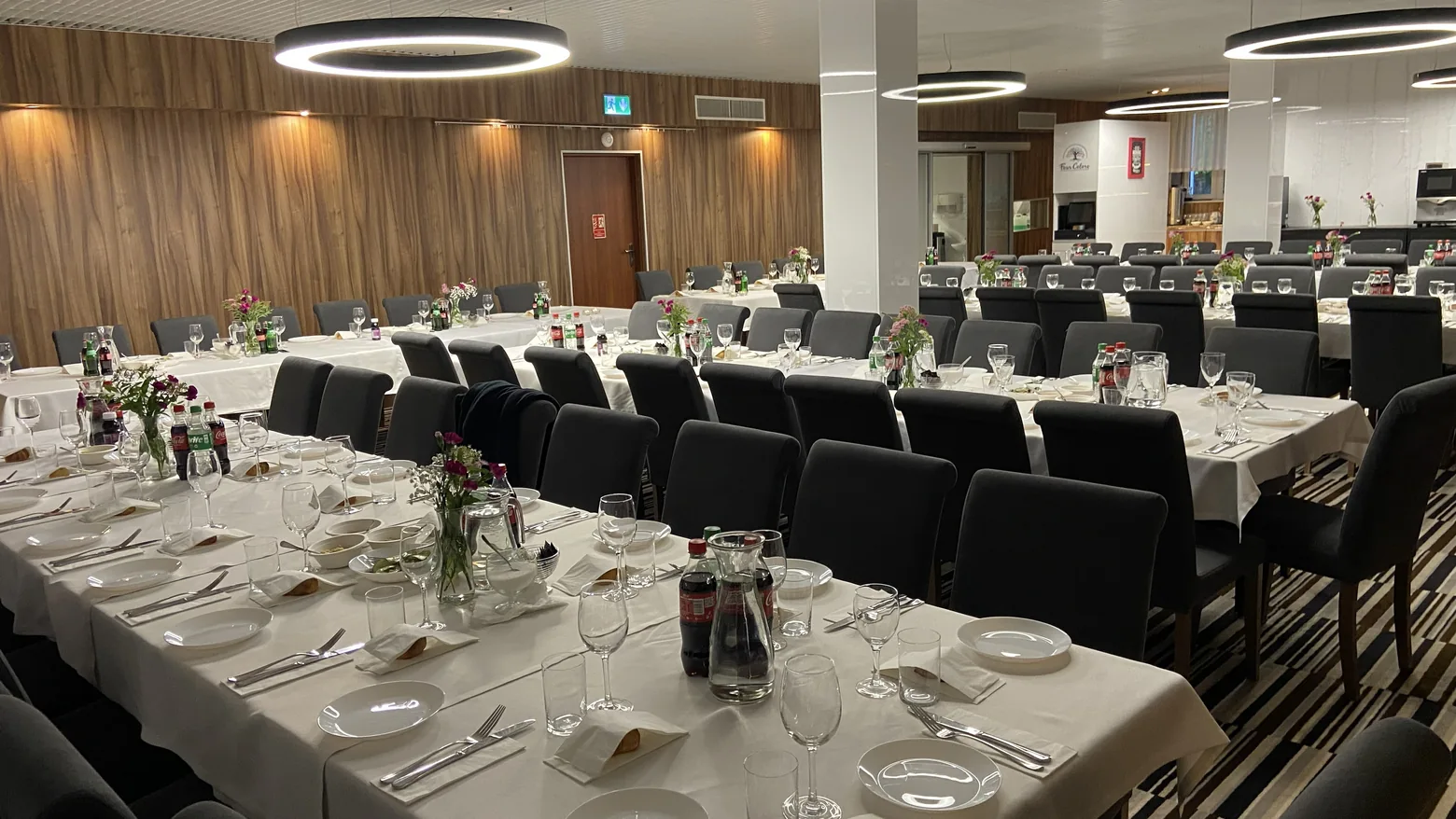
Model A - a full kosher kitchen on site. For camps, conferences and multi-day stays: we kosher the venue kitchen, bring a mashgiach, provide our own equipment and dishes, and cook a full menu on site - breakfast, lunch, dinner and Shabbat.
Model B - certified catering, delivered. For short programmes, or when a kitchen cannot be koshered: we coordinate meals from certified kosher caterers in Kraków, Warsaw and Lublin - double-sealed and stamped, reheatable in any hotel, with no mashgiach required on site.
The menu - a full week at the table
Our menu is a full weekly cycle - from daily breakfasts to a festive Shabbat. A taste of what reaches the table:
Breakfast (daily)
- Eggs 4 ways: scrambled, fried, omelette, shakshuka
- Crêpes, pancakes, or fritters
- Hummus own production
- Fruit jams + chocolate spread own production
- Violife plant-based cheeses (sliced & spreadable)
- Fresh cut vegetables and fruit
- Water, tea, coffee, plant milk, 100% juices
Lunch (weekly rotation)
- Chicken soup with noodles + soup almonds
- Soup of the day: tomato, pea, krupnik, mushroom, or vegetable
- Chicken schnitzel / meat patty / meatballs / goulash / roast chicken
- Fluffy rice, potatoes, fries, or orzo
- 2 seasonal salads + sauces: mayo, ketchup, tahini
- Seasonal fruit compote (on the table)
The Shabbat table
- Challah + salt
- Fish in portions
- Beef cholent
- Jewish egg salad · Matbucha · Hummus
House-made
- Hummus - smooth, classic, with olive oil
- Fruit jams, several varieties
- Chocolate spread
- Lightly salted salmon or pink trout - thin slices
- Pudding or chia dessert with fruit
- Roasted aubergine paste with garlic
- Matbucha (stewed tomatoes with peppers and garlic)
Certification: certified kosher products, a mashgiach on site, separate dishes for meat, dairy and pareve, and a kosher bakery. We set the full menu and a quote for your specific group - message us on WhatsApp.
Behind the scenes: night baking
The Kitchen at 2 a.m.
2 a.m. The hotel is asleep. The night receptionist is dozing. And from the kitchen comes the smell of butter, vanilla, and freshly kneaded dough. No, it's not the hotel's culinary ghost. It's our team preparing challah for Shabbat.
Night baking is one of those things in Jewish group hospitality that nobody thinks about from the outside - and yet for the participants, it often means more than the entire cultural programme. Because challah has to be fresh. Really fresh. The kind that fills the room with warmth when it's cut at the Friday table.
Why Kosher Night Baking Isn't a Luxury
In kosher dietary law, bread has its own category with its own rules. Pas Yisrael - bread baked under Jewish supervision or with Jewish involvement - is a requirement for many observant groups. This means a random bakery down the street won't do, no matter how good their bread is.
In Kraków, we work with a bakery under Chabad rabbinical supervision. In Warsaw, with a kosher artisan bakery. But when groups are travelling through areas where the nearest kosher bakery is an hour's drive away - we bake ourselves. On-site. At night. Because Shabbat challah waits for no one.
What Happens Between Midnight and Dawn
Shabbat baking starts Thursday evening or overnight - depending on group size and meal format. For fifty people, you need at least eight challahs. Add rolls, cake, and pastries for an elaborate Shabbat breakfast and the numbers grow quickly.
The kitchen is closed to hotel staff. Just our team and the mashgiach. Dough is kneaded by hand - some groups require that electrical equipment not be used during certain stages of preparation. Rumour has it that in one hotel in the Tatra mountains, our mashgiach personally hand-kneaded dough for thirty challahs. The rumour is true.
Between batches, the team drinks coffee, talks quietly, and watches the sun rise over the Polish mountains. There are worse ways to spend a Thursday night.
Fresh Challah as Living Tradition
There's something that happens at the table when fresh challah is brought out. Conversations pause. Everyone looks. Someone inhales deeply. And then that sentence - the one we hear every time: "This is how my grandmother's challah smelled."
You can't plan that in a logistics spreadsheet. But that's why we do night baking. Not for the statistics. For that one sentence at the Friday evening table.
Kosher Baking Across Poland
SEBIR arranges kosher baking and challah delivery for Jewish groups across Poland - Kraków, Warsaw, Lublin, Gdańsk, Wrocław, and less obvious locations. We deliver ready-made bread or, where kashrut level requires it, bake on-site under mashgiach supervision.
Ask us about the details when planning your trip. A challah that fills the air at dawn is a logistical detail. But it's also the moment people remember longest.